Dynamic Waterjet Cutting
Cut with water. Unchanged by heat.
Waterjet is how you trim a material you spent weeks engineering — without altering a single property you cured into it. Omnidirectional, heat-free, and clean enough to skip secondary finishing on most parts.
01 / Process advantage
The material you engineered is the material you ship.
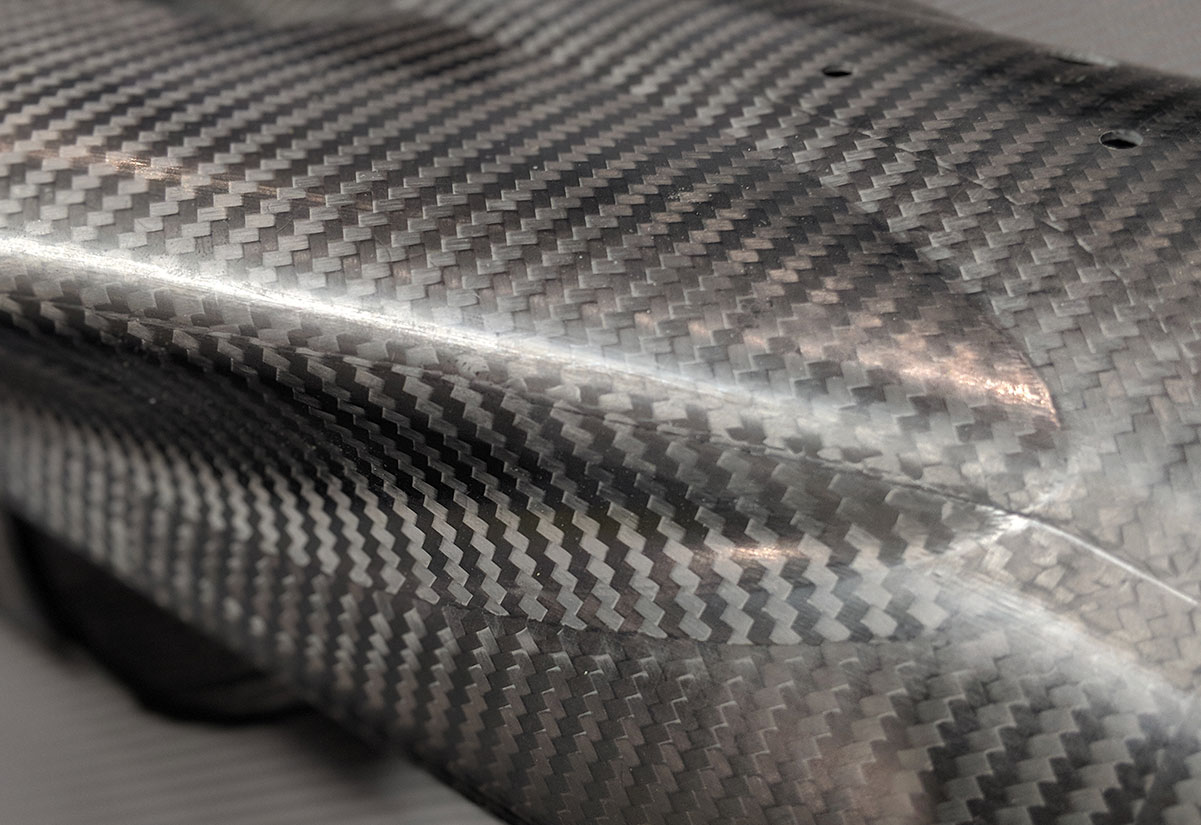
Thermal cutting changes composites at the edge — resin, bond lines, temper. A waterjet doesn't. The physical and chemical characteristics of the material are unaffected, from the first inch to the last.
- 01No heat-affected zoneCuts without heat — material properties stay exactly as cured
- 02Omnidirectional cuttingComplex profiles and interior features in any direction
- 03Superb edges — even on laminatesClean composite edges without delamination
- 04Usually no secondary finishingParts typically need no additional machining after the cut
02 / Systems
Three waterjets. Flat to fully contoured.
Flat profiles run on the dual-head for rate; contoured trim runs on the 5-axis. Same heat-free edge either way.
| Waterjet Systems | |
|---|---|
| 3-axis dynamic dual-head waterjetTwo cutting heads for production flat stock | 120 × 156 × 12 in. travel |
| 5-axis waterjetContoured trim on formed and cured parts | 120 × 144 × 24 in. travel |
| 3-axis waterjet | 72 × 120 × 12 in. travel |
03 / Fit by geometry
Choose the process by part need.
Flat profiles
Skins, doublers, shims and gaskets nested and cut on the dual-head system at production rate.
Contoured geometry
Cured, formed parts trimmed on the 5-axis head — net edges without a trim fixture drama.
Sensitive materials
Laminates, honeycomb and bonded panels where heat or vibration would cost you the part.
Combined travelers
Waterjet trim followed by 5-axis drill and CMM inspection — one building, one accountable schedule.
Ready when you are
Bring us the challenge.
Share the geometry, material, quantity and timing. We'll come back with a plan for the whole part — not a piece of it.